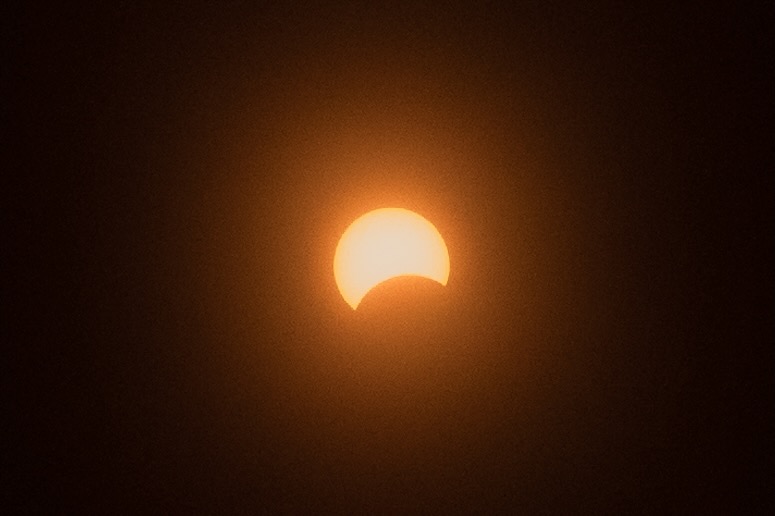
October 14, 2023 was the day I saw my first solar eclipse.
My sixth-grade science teacher had told me and my classmates about a partial solar eclipse that would happen the following week. He taught us what a solar eclipse was and gave us eclipse glasses. I wanted to see it!
The weekend of the solar eclipse, a friend and I went to Tahoe to see the eclipse with our own eyes. We hiked to a place we thought would have a good view, and waited.
There wasn’t a good way of knowing when the eclipse had started—we just had put on our eclipse glasses periodically and wait for a chunk to be bitten out of the sun.
Of course, no chunk was taken out of the sun, but that’s what it looked like. In a solar eclipse, the Moon passes between Earth and the Sun, covering the sun’s outline, making it look like a circlar bite was taken out of it.
We put back on our eclipse glasses, and there it was! We saw the an orange circle, which our science teacher taught us was the sun’s disk, and a circular chunk taken out of it.
I’d never seen something like it. But how could I remember this view? A camera, of course!
I then put my eclipse glasses against my mom’s phone, trying to take a picture of the eclipse. But it didn’t work.
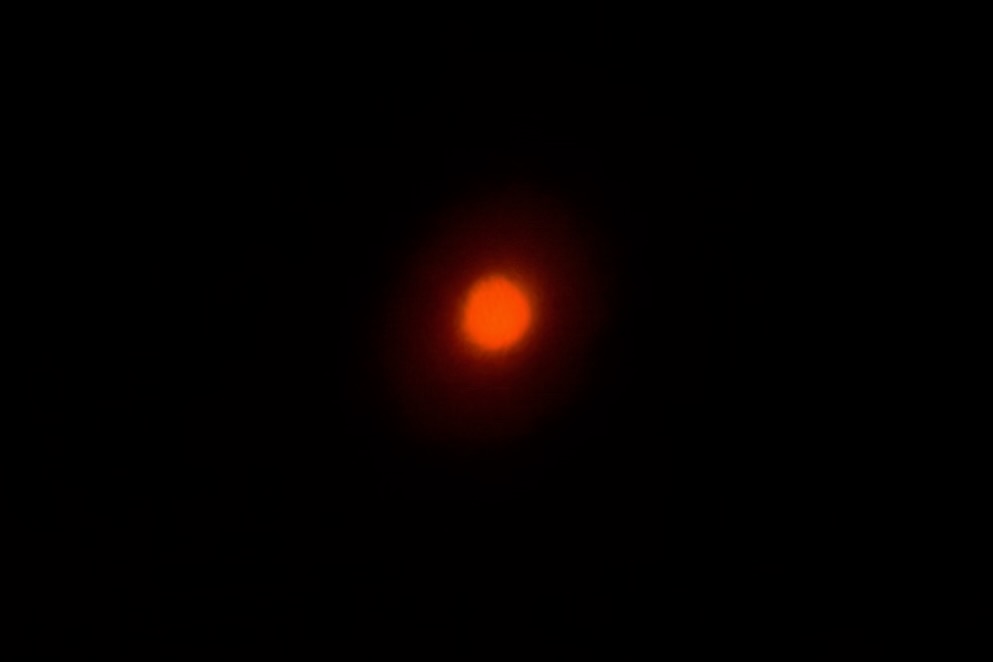
The sun was just a blurry blob. I couldn’t even see the missing chunk. How could I make this better?
Later that day, I was looking at the photos of the view that morning. There it was—a sharp reflection of the sun.
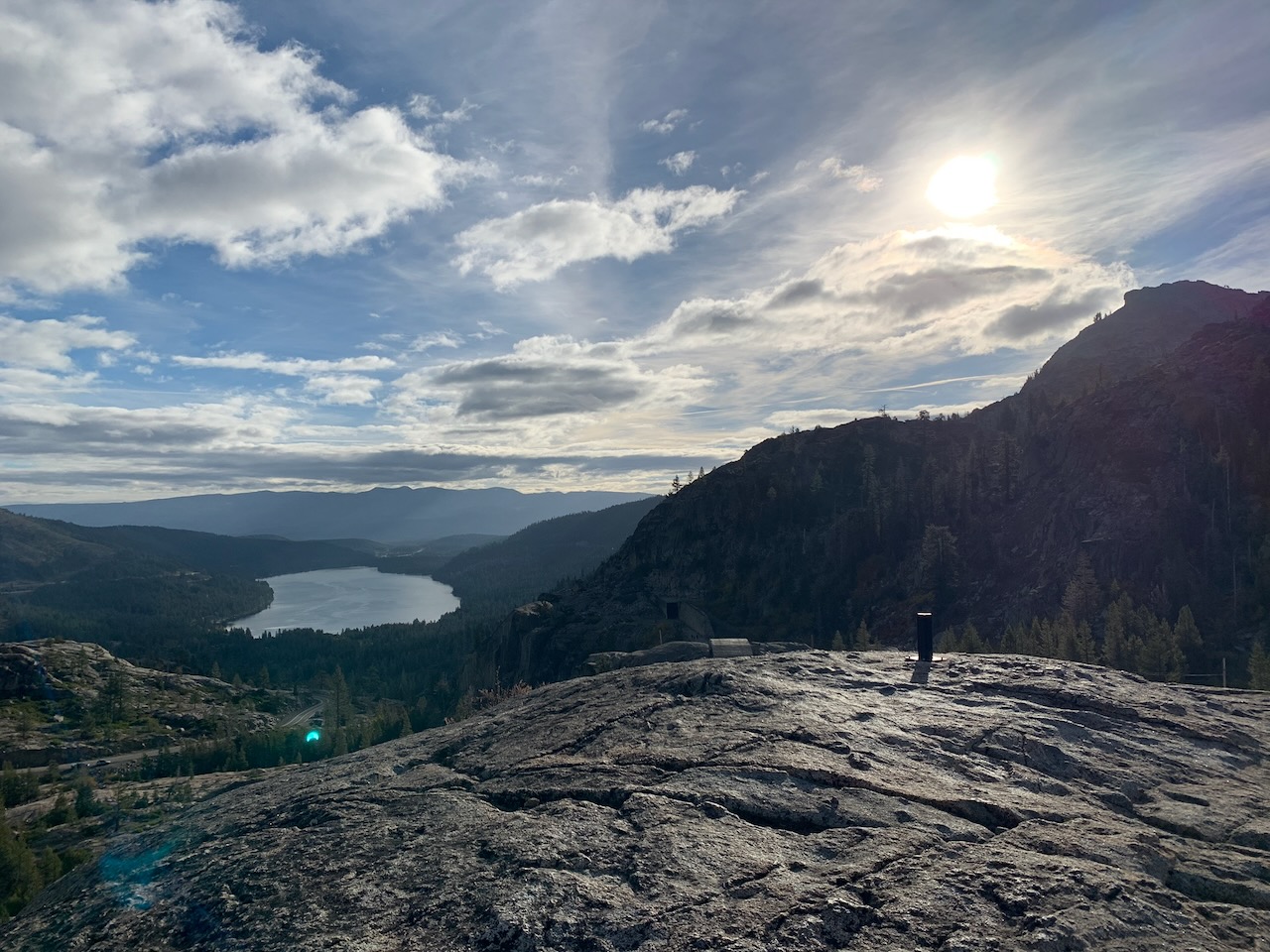
Look at the bottom-left of this photo, just underneath the lake. See it? That blue shape was what the sun looked like that day. Isn’t that cool?
The Next Eclipse
Usually, partial solar eclipses only happen every 2–3 years. But, somehow, one happened only six months later.
The same science teacher told us about the next eclipse, and this time, I wanted to do it right.
I had recently become interested in photography. After discovering my dad’s professional camera, the Nikon Z6, not too long before. From taking pictures of my dog to painting with light, I couldn’t stop experimenting with it.
Then it struck me—I should take a picture of the solar eclipse with this camera. After researching how to take pictues of eclipses, I was set.
I bought a 4×4 inch solar filter sheet, which was the same material used in the eclipse glasses that I tried using with my mom’s phone. I then 3D-printed a mount that would hold the square filter to my camera lens, allowing me to take crisp pictures of the sun without ruining my camera sensor.
I also bought a remote camera trigger and hooked up my camera’s HDMI output to a portable monitor, and I was ready for the big day.
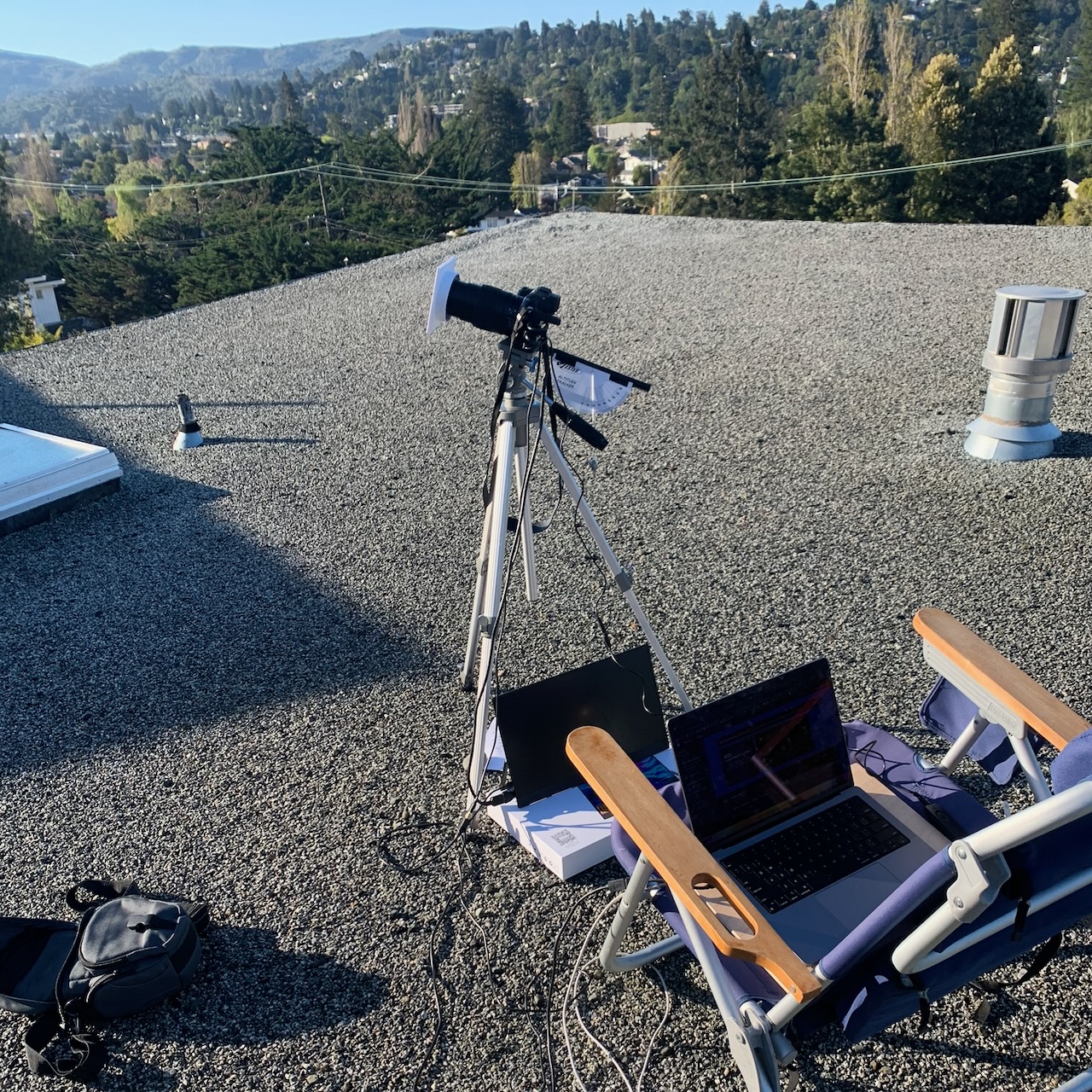
The morning of April 8th, 2024, I brought up my camera supplies I had already prepared up to my roof.
I attached the camera to the tripod, plugged in the camera into my laptop I used for livestreaming, and even set up a beach chair for maximum comfort.
Just like the first eclipse, I could do nothing but wait. But unlike that first eclipse, I could just look at the monitor to see if the eclipse had started. I also used the Time and Date website to generate a schedule to see when different stages of the eclipse.
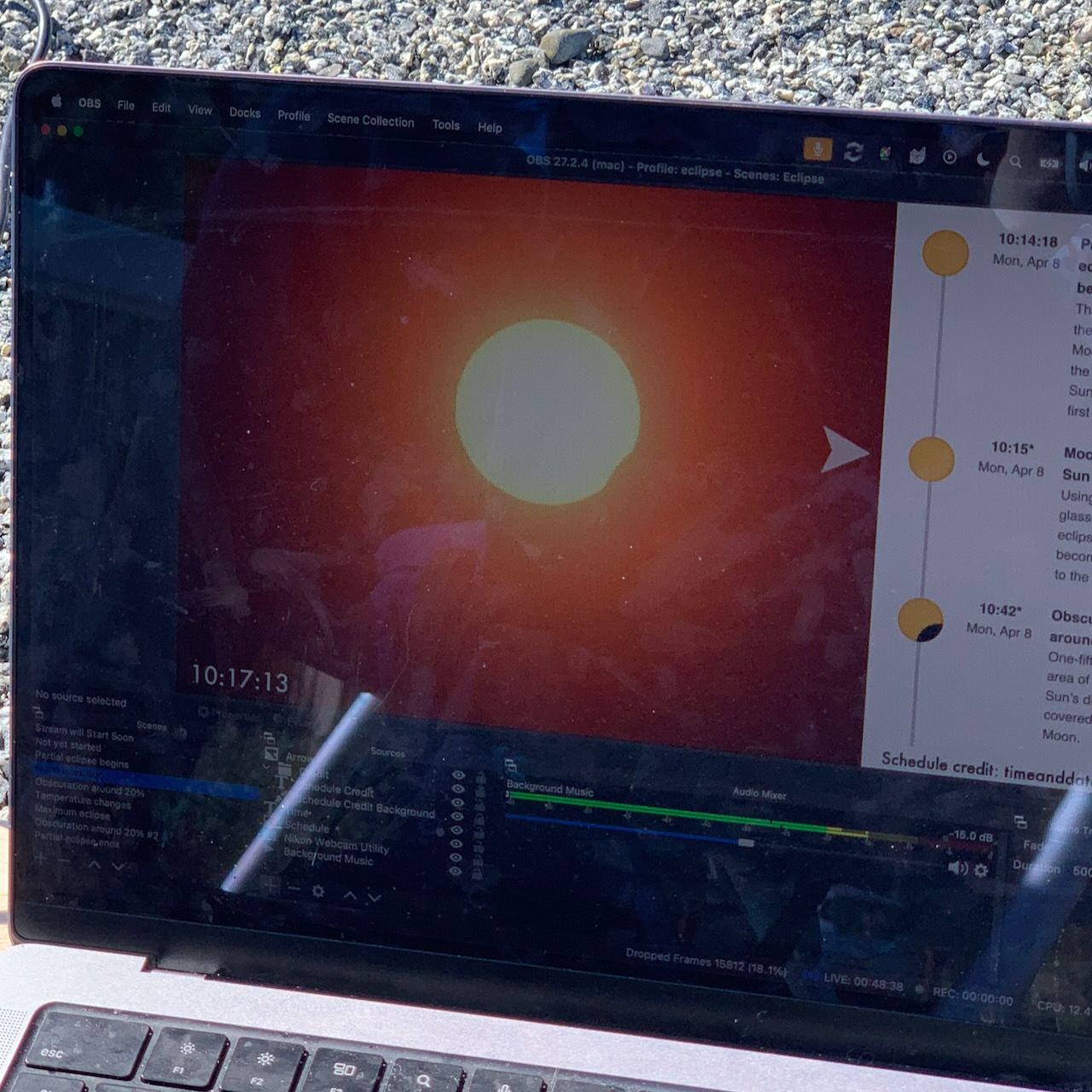
Just like before, there it was—an, easier to see, chunk taken out of the sun. With the exception of the incredibly dirty screen, this was an amazing sight.
I livestreamed the progress, with the camera feed, current time, and place in the schedule, to a total of 2 people. I expected a larger audience, but having only shared the livestream with a few of my friends, as well as my neighbor who was quesitoning my sanity, I’m not surprised.
Precisely 11 hours, 13 minutes, and 28 seconds after midnight, the sun had reached maximum eclipse. Although I wasn’t in Texas, where the total eclipse was, I was amazed by the sight.
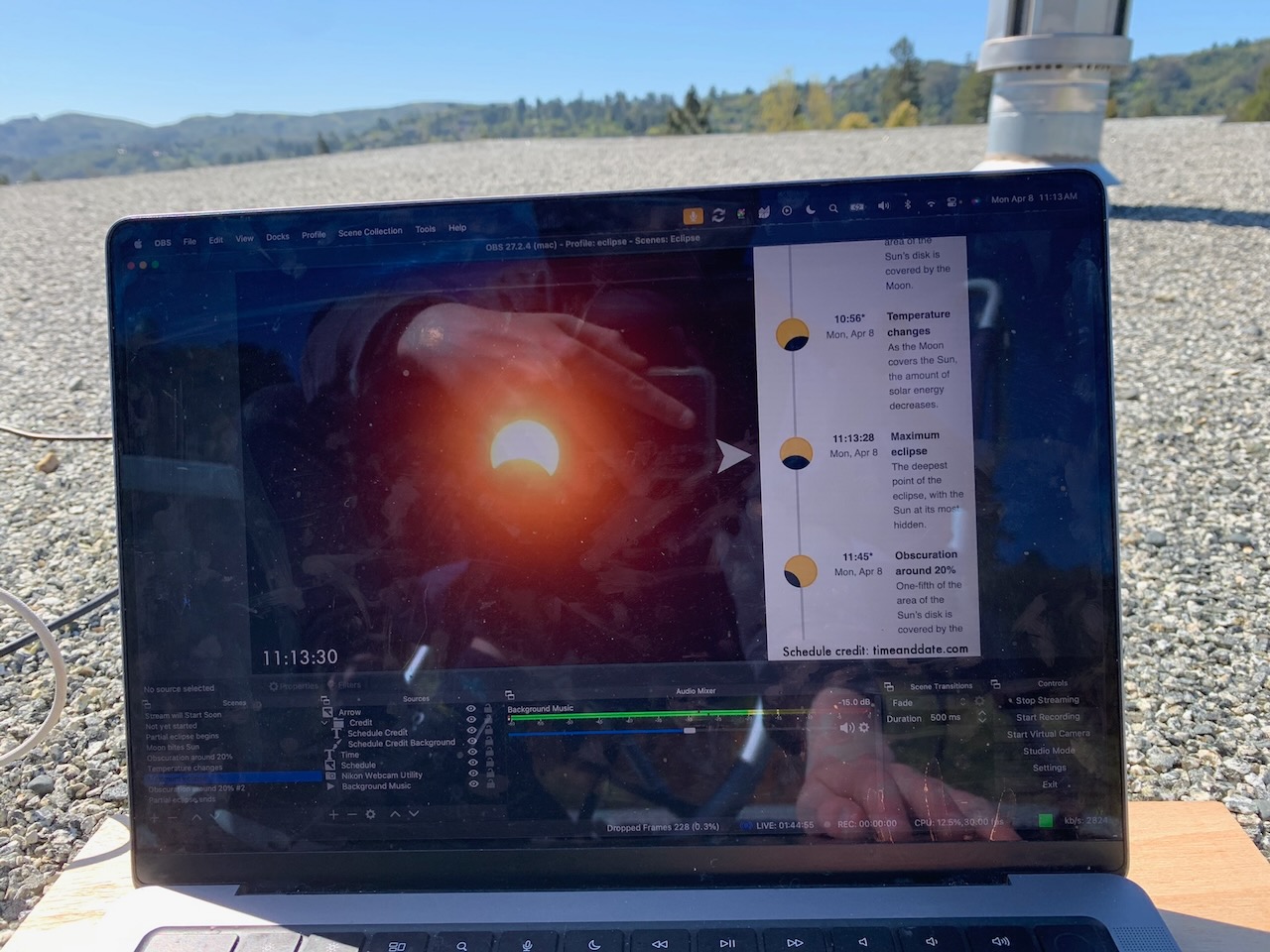
I knew that would be a once-in-a-lifetime sight and I was incredibly proud with the results. Okay, there will be another partial solar eclipse in 2029, and I’ll make sure to get photos of that too.
Reflection
From my first solar eclipse in October 2023 to my second six months later, I learned not only not how to take a photo of an eclipse, but also patience, creativity, and appreciation for nature.
I showed my sixth-grade science teacher and my classmates the photos I took, and he was amazed that I made the questionable yet fun decision to sit on my roof for hours on end. This was, without a doubt, one of my funnest times photographing.